Repair or replace
A Leak in the Evaporator: Worth Repairing?
- Signed
- Dean Halvorsen
- Role
- Refrigeration technician — sealed systems and airflow
- Certification
- EPA Section 608 certified
- Published
Straight answer
Often, yes. The evaporator (the cold coil hidden behind a cover inside the section) is one of the sealed system's replaceable parts, so a leak there is priced within the same repair range rather than ending the unit. Sub-Zero Repair Edmonds finds the leak and prices the fix: (206) 210-3547.
To replace it
$12,110–$21,200
a like-for-like new built-in, with the fitting and any cabinet work still to pay on top
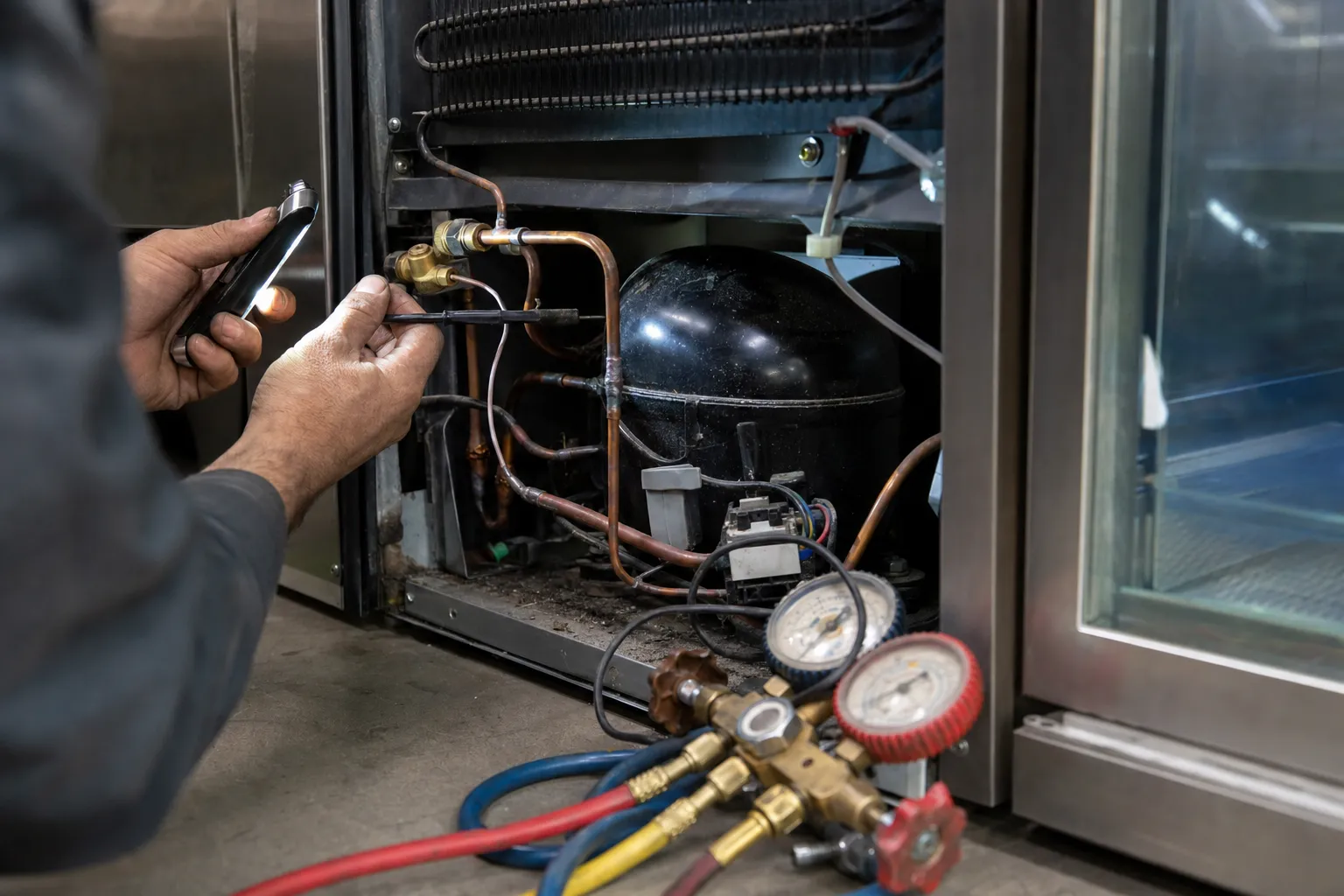
Still a sealed-system repair, not the end of the unit
Sub-Zero counts the evaporator among the parts of the sealed system, alongside the compressor, the condenser, the drier and the tubing that joins them. Its service manual treats a leak the same way wherever it sits: the refrigerant is captured, the leak is repaired if it is at a soldered joint or the part is replaced if it is not, a new filter-drier goes in, and the system is cleared out and recharged.
An evaporator leak therefore ends one of two ways. A joint that has let go is soldered. A coil that has pitted through, which corrosion can do to thin coil metal, is replaced whole, and that is the larger of the two jobs.
Wet or dry: what sets the size of the job
The evaporator sits on the low-pressure side of the system. Sub-Zero’s manual lists moisture from a low-side leak among the ways a sealed system becomes contaminated, and its procedure for a contaminated system is far longer: the high side flushed, the compressor replaced, a new filter-drier, and a second drier added on the suction line.
So the bigger question is not where the hole is but whether the system is still dry. A leak repaired while the system is clean stays a coil job. One that has let moisture in brings the compressor into the bill too, and that is where the comparison with a new unit starts to tighten.
Other things that tip it
On a built-in combination the other section runs on a system of its own and is judged separately; a sound second system is a point in favour of repair. A coil that has leaked before, or pinholes appearing in other parts, suggests the metal is corroding more widely, and patching one spot will not stop the next.
Repair makes sense when
- The leak is at one joint that can be soldered, or on a coil that can be replaced as a whole.
- The system is still dry, so the work stops at the coil, the filter-drier and the recharge.
- The cabinet, the door seals and the other section are all in good order.
Replace it when
- Moisture has reached the system, the compressor has to go too, and the cabinet is also showing wear.
- Pinholes are turning up in more than one part of the sealed system, not only this coil.
- This coil was repaired before and has now started leaking somewhere else.
What we check first
- Exactly where the refrigerant is escaping, and whether it is a joint or the coil itself.
- Whether the system shows signs of moisture or contamination.
- The other section's system, and the cabinet around both.
Questions people ask next
Can the leak wait while I make up my mind?
Not for long. A leak keeps losing refrigerant, the section keeps warming, and running short of charge is one of the recognised causes of compressor failure. On the evaporator side there is moisture to think about as well, since Sub-Zero's manual names a low-side leak as one way a sealed system becomes contaminated, which widens the job considerably.
What should I have ready when I call about a suspected evaporator leak?
The model and serial numbers off the unit's label, a photo of it if the print is small, and a note of how the warming has developed over recent weeks. An invoice from any earlier sealed-system work helps as well. Sub-Zero Repair Edmonds takes those details on (206) 210-3547 and books the $89 diagnosis.